
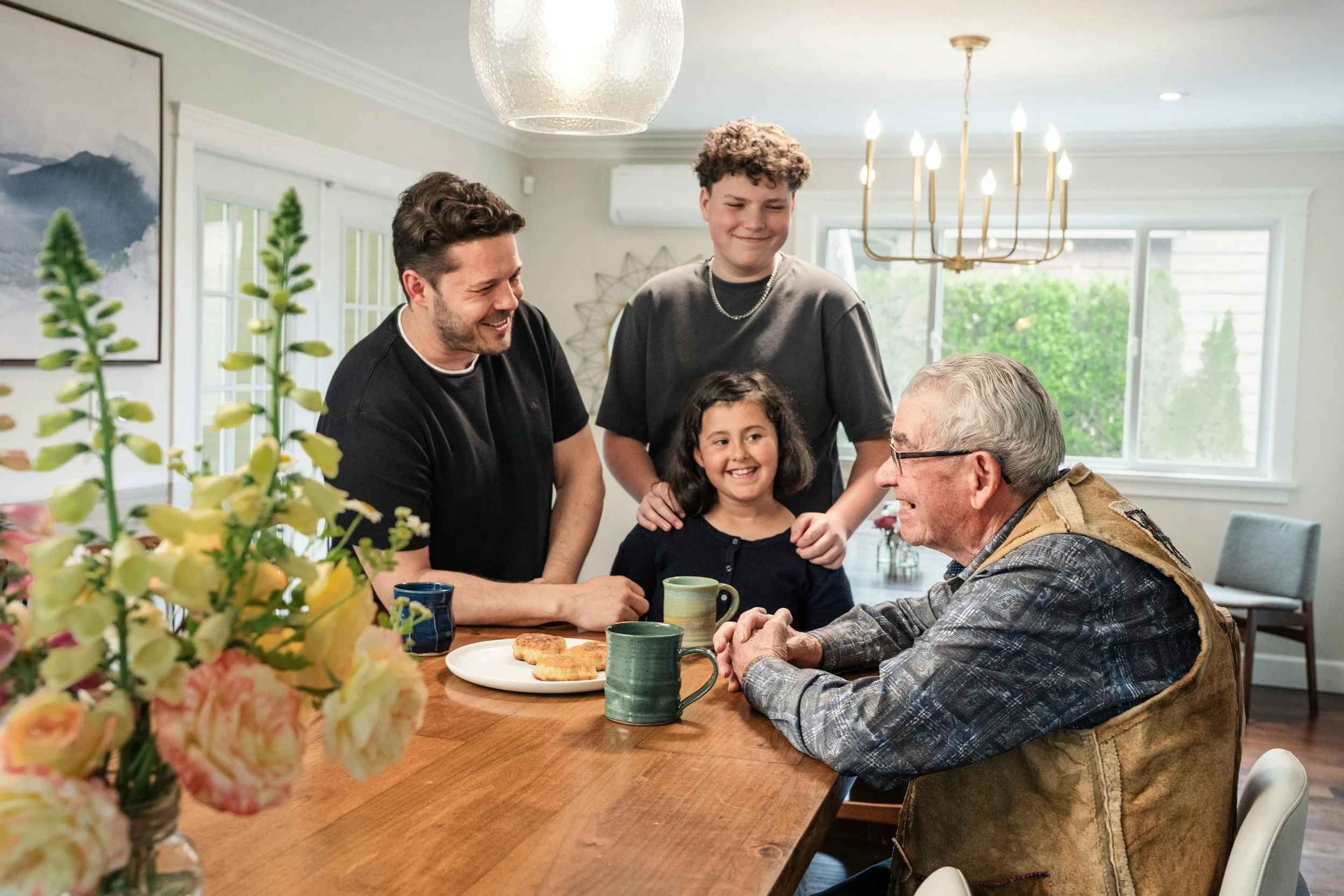
Tomorrow, many of us will gather around a table with the people we love most. Thanksgiving is a time for gratitude, football, and too much pie. It’s also one of the few times each year when the whole family is in the same room, which makes it a natural moment to talk about something most families avoid: what happens if someone needs care.
This year, Saturday Night Live handed us the perfect conversation starter. If your phone lit up recently with friends and relatives sending you the same clip, you are not alone. SNL’s “Sister” sketch went viral almost overnight. Over 17 million people have watched it, many of them sharing it with friends and siblings. If you haven’t seen it yet, watch "Sister" from SNL on YouTube. It runs just a few minutes, and we promise it’s worth it.
The sketch is a spoof of a prescription drug commercial. Host John Mulaney and his on-screen brothers sing the praises of a revolutionary elder care solution called “Sister”: a live-in, around-the-clock caregiver who costs nothing and also happens to be your sister. No applications, no insurance forms. Just text “Dad fell,” and Sister quits her job, packs up her life, and moves across the country to handle everything. Meanwhile, the brothers go on with their lives, and the fine print scrolls across the bottom with side effects like guilt and the warning that Sister may break down without notice.
Funny Because it’s True
There’s an old saying that comedy works best when it’s true, and this sketch proves it. Viewers didn’t just laugh. They recognized their own families. The comments filled up with eldest daughters, only daughters, and “Sister’s husbands” saying the sketch was painfully accurate. One moment that struck a particular nerve: the siblings who did little of the caregiving still received an equal inheritance.
That is the part that stopped us. As two sisters who lead an elder law and estate planning firm, we see this story in our office every week. One family member, very often a daughter, becomes the default caregiver. She is the one who manages the medications, fights with the insurance company, makes the doctors’ appointments, attends the appointments, and keeps all the other family members apprised of what is going on. She may cut back her hours or leave her job. And because no one ever sat down and made a plan, the arrangement is never discussed, never put in writing, and never recognized when it’s time to divide Mom or Dad’s estate.
The brothers in the sketch aren’t villains, and neither are the siblings in most real families. Caregiving tends to fall on whoever lives closest or steps up first, and then it stays there. The problem isn’t bad people. It’s the lack of a plan.
Turn the Laugh into a Conversation
Plenty of people are already joking that this sketch will come up over the turkey. Let it. A shared laugh is a gentler way to start a hard conversation than waiting for the text that says “Dad fell.” The conversation doesn’t need to happen during dinner, and it doesn’t need to be solved in one day. A few gentle approaches can open the door:
• Use the sketch. Mentioning “Sister,” or a friend’s experience, can make it easier to ask, “What would you want if that happened to you?”
• Start with your own plan. “I just updated my power of attorney, and it got me thinking. Do you have one?” Leading with yourself makes the topic feel less like an accusation.
• Ask, don’t tell. Aging parents want to stay in control of their lives. Questions like “Where would you want to live if stairs became hard?” respect that.
• Plan a follow-up. If the conversation goes well, schedule a time to continue it, and consider meeting with an attorney together.
Questions Worth Asking:
• Who would you want to make medical and financial decisions if you couldn’t?
• Where are your important documents, and who knows how to find them?
• Do you have a power of attorney, health care power of attorney, and will or trust? When were they last updated?
• How would you want to pay for care if you needed it?
• Who in the family is willing and able to help, and how can the load be shared fairly, so it doesn’t all fall on one “Sister”?
• If one of us gives up work or income to provide care, how should that be recognized, through a caregiver agreement or in your estate plan?
Don’t Leave it All to “Sister”
November is National Family Caregivers Month and Long-Term Care Awareness Month, and we’ve spent the month writing about the very issues this sketch puts on display:
• “Sister” needs legal authority, not just good intentions. In the sketch, Sister handles the insurance company and the doctors. In real life, she can’t do that without a power of attorney, health care power of attorney, and HIPAA authorization in place, and those documents must be signed while a parent can still make decisions. We covered them in Caregiving Starts With Paperwork: The Legal Documents Every Family Caregiver Needs. Blog Post
• “Sister” isn’t really free. The cost is hidden in lost wages, lost retirement savings, and the caregiver’s own health. If one family member is giving up income to provide care, put it in writing. A caregiver agreement can pay her fairly and, when done correctly, can fit within a Medicaid plan. Read Caring Shouldn’t Cost You Your Future: Caregiver Agreements and Protecting the Family Caregiver. Blog Post
• Families need to know who pays for care. Many families rely on a “Sister” because they don’t know what Medicare, Medicaid, insurance, or veterans’ benefits will cover. See Medicare vs. Medicaid: Who Really Pays for Long-Term Care? Blog Post
• Siblings can share the load from anywhere. Not every sibling can provide hands-on care, but someone far away can manage bills and paperwork, research care options, help pay for respite care, or give the primary caregiver a weekend off.
• The estate plan should reflect reality. A parent can choose to recognize the child who provided care. That choice belongs in a properly drafted will or trust, not in an argument after the funeral.
• For some families, “Sister” is a lifelong role. Siblings of a loved one with a disability often know they will someday step into a parent’s shoes. A supplemental needs trust and a clear plan can support that sibling instead of overwhelming her.
A Plan for the Caregiver:
Here’s something many caregivers overlook: who would take care of your loved one if something happened to you? Caregivers are often so focused on someone else that their own planning gets pushed aside. Yet a caregiver’s sudden illness or death can leave a dependent parent, spouse, or child without support overnight.
If you’re a caregiver, make sure you have your own power of attorney and health care documents, a will or trust that accounts for the person who depends on you, and a written emergency plan that tells others how to step in. Caring for yourself is part of caring for them.
If You’re the “Sister” in Your Family:
To every family caregiver: thank you for the work you do every day, often without recognition. Whether you are the one who always answers the phone, or the sibling who just realized you might be the one on the couch in the sketch, we can help your family build a plan that is fair to everyone, including the caregiver. If your Thanksgiving conversations raise questions, call McFadden Bushnell LLC at (216) 714-0090 or visit The McFadden Bushnell Website to schedule a consultation.
With two sisters leading our firm, we really understand the importance of family. From all of us at McFadden Bushnell LLC, Happy Thanksgiving.
This post is for general information only and is not legal advice. Reading it does not create an attorney-client relationship. Please consult an attorney about your specific situation